May 22, 2026

Back to articles
Medical Issues
Dental Care For Our Pets
Dental disease is the most common health problem we see in dogs and cats at Middle Brighton Vet. By three years of age, over 80 percent of pets show signs of dental disease - and most of them are not showing obvious symptoms yet.
Here is why that matters and what we can do about it.
Why pet dental health is a veterinary issue, not just a grooming issue
The bacteria involved in periodontal disease do not stay in the mouth. They enter the bloodstream and can affect the heart, kidneys, and liver over time. This is not a theoretical risk - there is a well-established connection between chronic dental disease and organ damage in dogs and cats.
Dental disease also causes pain. Pets are extraordinarily good at masking pain and will continue eating and behaving relatively normally even with significant dental pathology. By the time an owner notices a problem, the disease is often well advanced.
What does professional dental care involve?
A professional dental assessment and clean at Middle Brighton Vet is performed under general anaesthetic. This is not optional - it is the only way to properly assess and treat the teeth and gums. A pet that is awake cannot safely have dental instruments used in their mouth, and many lesions are only visible on intraoral X-ray, which requires the pet to be still.
Under anaesthetic we perform a full oral examination, probe the gum line around every tooth to assess pocket depth, take intraoral X-rays to evaluate the roots and supporting bone, scale and polish all tooth surfaces including below the gum line, and extract any teeth where the disease is too advanced to save the tooth.
What about home dental care?
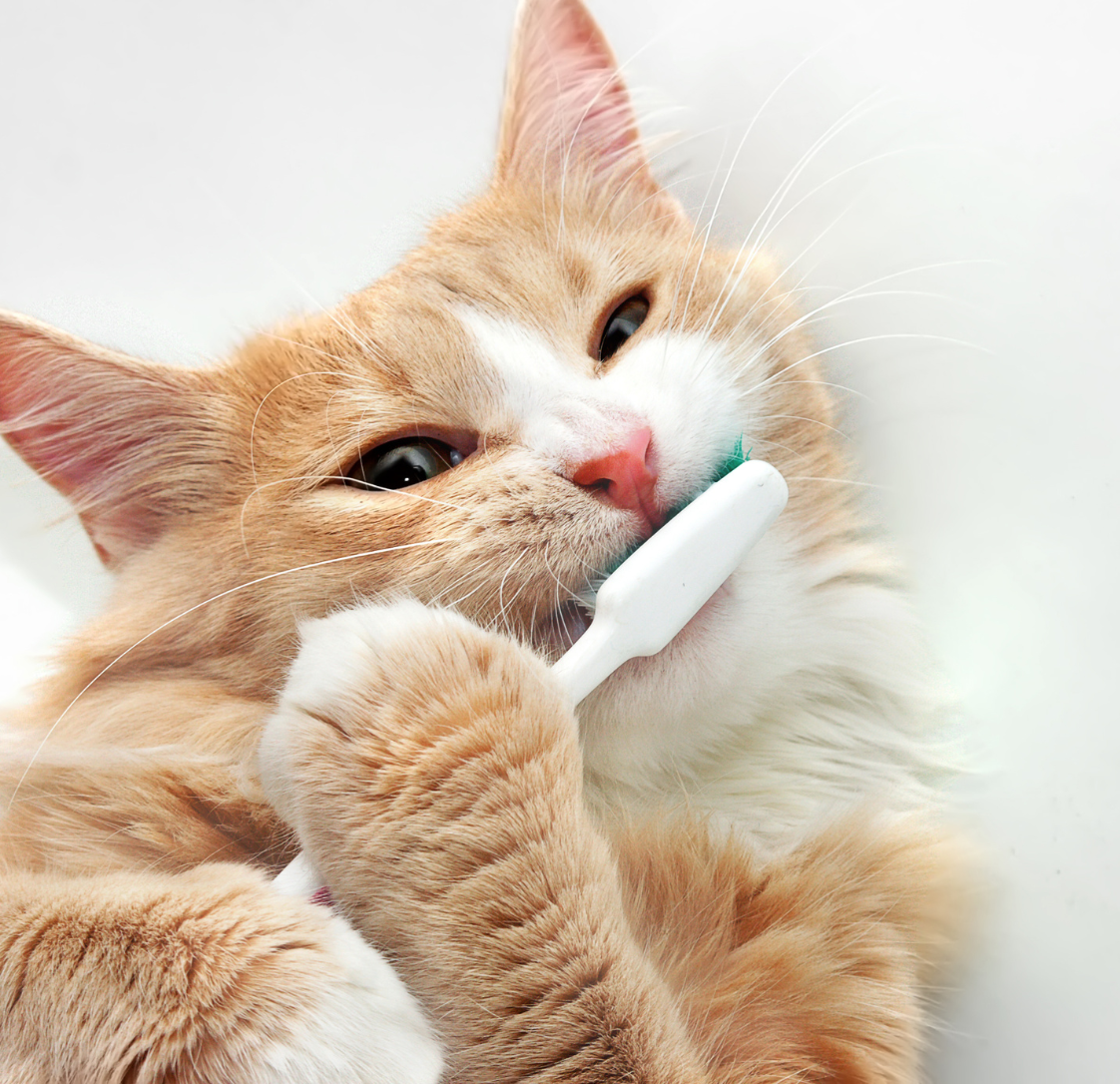
Toothbrushing is the single most effective home care measure. Daily brushing with a pet-safe toothpaste is shown to significantly reduce plaque accumulation. Dental chews, water additives, and VOHC-approved diets provide a meaningful but secondary benefit.
Home care does not replace professional cleaning - it extends the intervals between professional cleanings and slows disease progression.
Dr Pey's ANZCVS credential in veterinary dentistry
Dr Pey Hor holds a Membership in Veterinary Dentistry from the Australian and New Zealand College of Veterinary Scientists - a postgraduate credential held by very few vets in primary care in Melbourne. This means dental cases at Middle Brighton Vet are assessed and managed at a level beyond standard general practice.
When to call us
If your pet has not had a dental check in the past twelve months, book one. If you have noticed bad breath, difficulty eating, pawing at the mouth, or any facial swelling, call us sooner.
Call us on (03) 9592 9811 or book online at middlebrightonvet.com.au/book-online.
Related services at Middle Brighton Vet: Pet Dentistry
.png)