May 22, 2026

Back to articles
Puppy and Kitten
Kitten Nutrition Guide
Bringing home a kitten is exciting but getting their nutrition right from day one is one of the most important things you can do for their long-term health. Kittens grow rapidly in their first year of life, and their bodies need the right fuel to develop properly.
Kittens should eat kitten-specific food rather than adult cat food. Kitten food is formulated to be higher in protein, fat, and certain nutrients including DHA for brain and eye development. Adult cat food does not meet the nutritional requirements of a growing kitten.
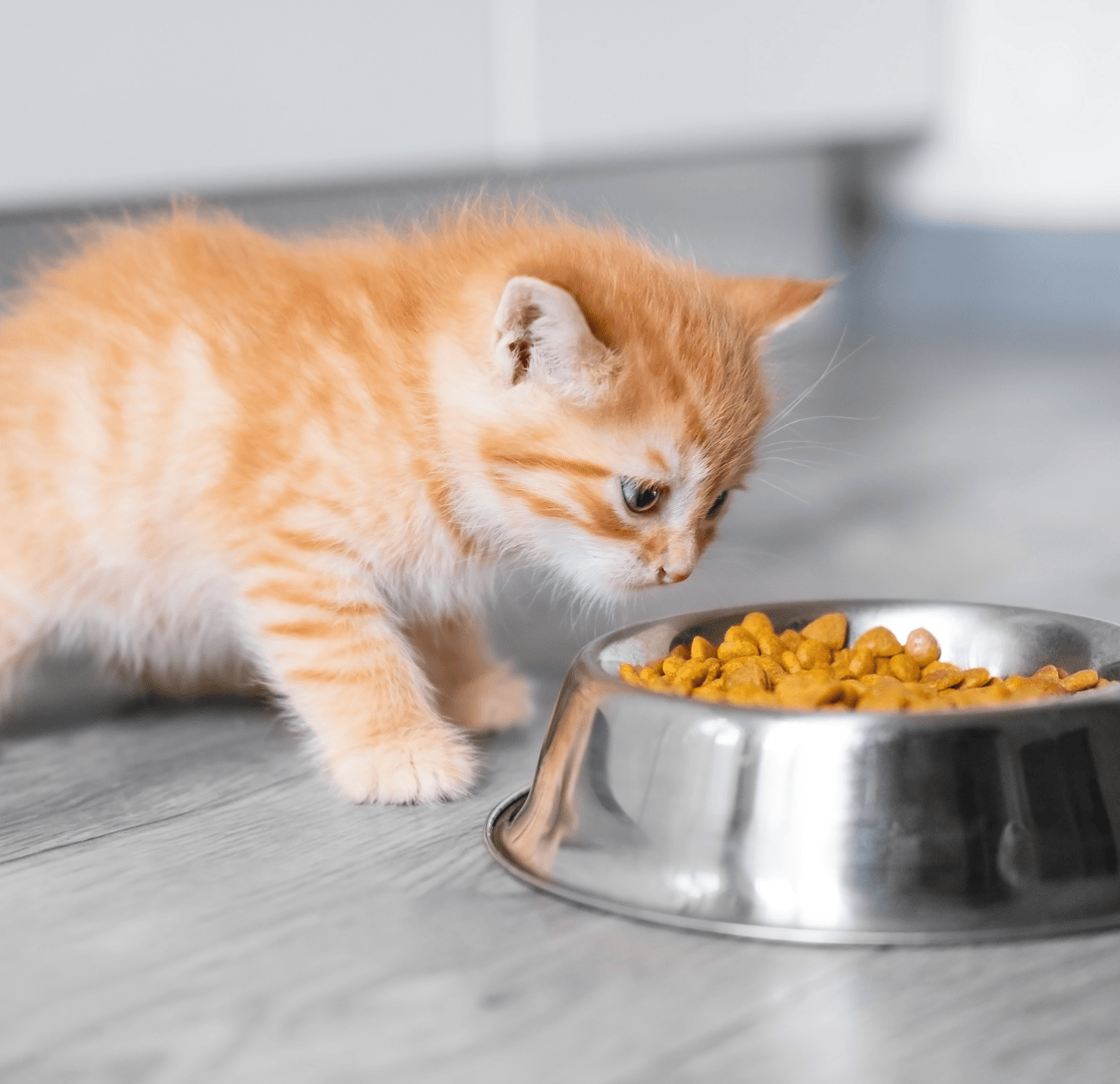
Wet food is generally preferable to dry for kittens - it provides hydration, is easier to eat, and more closely resembles a natural diet. If you choose to feed dry food, ensure your kitten has constant access to fresh water as cats have a low thirst drive and can become chronically under-hydrated on dry-only diets.
Feed kittens three to four small meals per day until six months of age, then reduce to twice daily. Avoid free-feeding dry food past six months as it can contribute to obesity. Portion sizes should be adjusted based on your kitten's growth and body condition - we can guide you on what is appropriate at each health check.
Human food should not form part of a kitten's diet. Many common human foods are toxic to cats including onion, garlic, chocolate, and grapes. Raw meat carries bacterial risks and is not necessary when a balanced commercial diet is fed.
If you have questions about what to feed your kitten, bring them in for their first health check and we will discuss their nutritional needs as part of the consultation.
Call us on (03) 9592 9811 or book online at middlebrightonvet.com.au/book-online.

.png)